
Welcome to the Surface Roughness Analysis Blog
Why do brakes squeak? When will a gasket leak? What caused the haziness in my painted finish?
Surface texture and function are tightly linked. Understanding the relationship between texture and function, and sharing that information with engineers and quality professionals, is what Michigan Metrology is all about.
The articles in this blog explore the concepts of surface texture analysis and measurement. We show how you can apply these concepts to solve problems related to leaks, squeaks, appearance, wear, noise, fit, friction, vibration, adhesion, and many other functions.
Looking for more information on specific surface texture parameters? Visit our Surface Texture Parameters Glossary for an introduction to dozens of 3D surface roughness analysis parameters.
And, if you want to learn much more about surface texture consider attending our online and in-person classes for an immersive introduction to the many concepts in surface analysis.

Bringing 3D optical measurement to Detroit
March 19, 2024Remembering the early days, Part 2 Michigan Metrology, LLC is approaching our 30th anniversary, and we’re taking a look back on some of the highlights of our history. In this
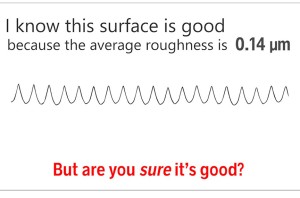
Average Roughness
February 29, 2024If you rely on average roughness (Ra) to control your surfaces, check out this short animation. It shows that very different surfaces can all have the same Ra value…and Ra

A measurement lab can be a development partner
February 20, 2024Startups, incubators, “skunk works…” when a company is in startup mode, everything is happening at once. Manufacturing processes are being designed while funding is being secured and sales are being

Anthony Musci’s “rock star” engineering career
January 31, 2024Where can your career take you after your first job has you designing Aston Martin engines? The answer is: everywhere! Anthony Musci describes himself as a “serial entrepreneur,” having applied

Remembering the early days
January 22, 2024In August 2024, Michigan Metrology will celebrate our 30th anniversary in surface roughness measurement. Over the next months we will be taking a few trips down memory lane to remember
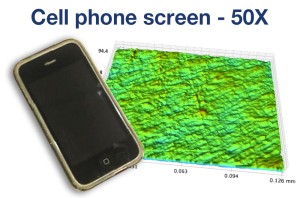
Smart Phones and Space Telescopes
January 9, 2024Q: What do your cell phone and the Webb Space Telescope have in common? A: The surface finish of their optics! The glass surface of most smart phones boasts a
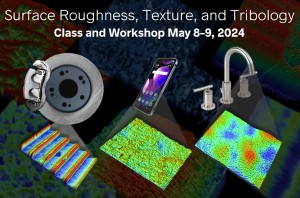
Surface Roughness, Texture and Tribology Short Course
January 4, 2024May 8–9, 2023 Registration is now open for the Surface Roughness, Texture, and Tribology short course, held in Livonia, Michigan, May 8–9, 2024. The 2-day class offers a unique opportunity
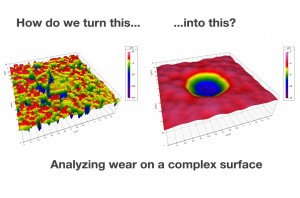
Where is the wear?
December 11, 2023A joint post with Digital Metrology Solutions. Download this article as a PDF How would you measure the wear on this porous surface? This friction material was subjected to a
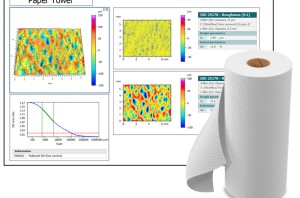
Which feature size scales matter for coating adhesion?
November 21, 2023Download this article as a PDF When it comes to coatings, the amount of surface area matters. We know that increasing the surface area can improve adhesion, and that “roughing
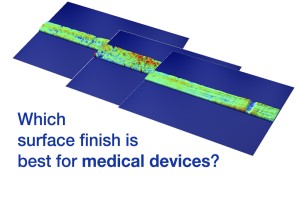
What surface finish does a medical device need?
November 14, 2023For a medical device to function over a long lifespan, we need to accurately specify, measure, and control its surface finishes. Yet, most surface finish specifications rely on parameters that
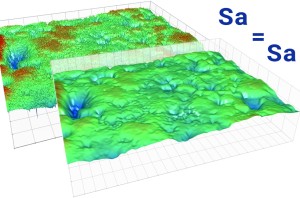
My surface got shinier…but the average roughness stayed the same!
October 31, 2023Download this article as a PDF I have a surface with a certain average roughness value. When I polish the surface, it gets shinier…but the measured number hasn’t changed! What’s
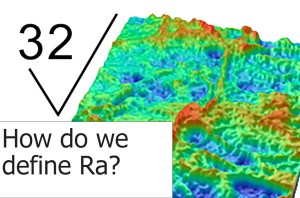
How Do We Define Average Roughness?
October 17, 2023Average Roughness—in surface texture measurement, it’s one of the most frequently specified surface roughness parameters. In this video we look at how average roughness (Ra, or Sa) is calculated. We